The past as a foreign country
Out Stealing HorsesThe past as a foreign country is both an image of estrangement and a description of Trond Sander’s changing relationship to memory. For much of his life, he says, the past felt foreign because he had been obliged to experience it that way; in the present, he can enter it deliberately, while recognizing that what followed has altered how its scenes appear.
Estrangement and Lost Sequence
The phrase evokes more than distance in time. Elsewhere, Trond Sander imagines the solitary old man as shipwrecked, with no anchor in the world beyond liquid thoughts in which time has lost its sequence. The image makes temporal disorientation feel like a loss of support: memory can become a place adrift from ordinary order, rather than a stable record of what happened.
The familiar saying that “the past is a foreign country” is associated with the idea that people do things differently there. Trond Sander says that this foreignness has marked most of his life, though he leaves the reason for that obligation unstated. His account does not simply reverse the metaphor by declaring the past familiar. Instead, it marks a change in his access to it.
Memory as a Place He Can Re-enter
In the old house’s kitchen, after his daughter’s surprising visit has ended and her car has gone down the road, Trond Sander looks back on the days with his father. He recognizes that each movement through the landscape has taken color from what came afterward and cannot be separated from it. The past is therefore not an untouched country preserved outside the present: later consequences have changed the meaning and appearance of its remembered scenes.
At the same time, memory is something he can approach by choice. He describes concentrating, finding the right shelf in memory’s store, and disappearing into the right film. This image gives recollection both an archive’s order and a film’s capacity to carry him into a scene. The past remains distinct, but it is no longer wholly inaccessible.
A Foreign Country Felt in the Body
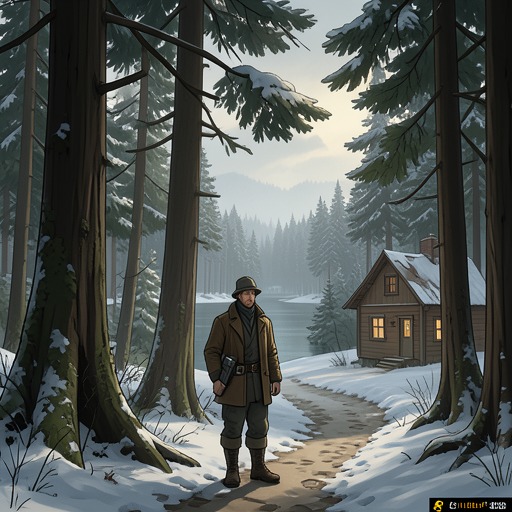
The memories he enters are specific journeys with Trond’s father. He recalls riding high above the river along a forest ridge, descending on the other side, and crossing the border into Sweden. The landscape marks a literal passage into a place that was foreign to him, joining geographical crossing to the metaphor of temporal distance.
He can also return to a night beside a bonfire beneath an overhanging cliff. He remembers seeing Trond’s father lying still with his eyes open, red light from the embers on his forehead and stubbly cheek. In the morning, Trond’s father had already watered and groomed the horses and was tense but not sharp in his voice; they packed, saddled the horses, and set off before the dreams had left Trond Sander’s mind. Later, he hears the river before seeing it and recognizes it, in Sweden, as their own. Such remembered sensations make the past foreign without making it blank: its distance coexists with an intimacy he can still feel in his body.